Think Week 2026: What we learned when we looked up from our desks
Every October at Agnostic, we kick off our new fiscal year by stepping away from our desks for Think Week. Four days to immerse ourselves in new experiences and ground ourselves in what we’re all about - Better Thinking, Better Results.
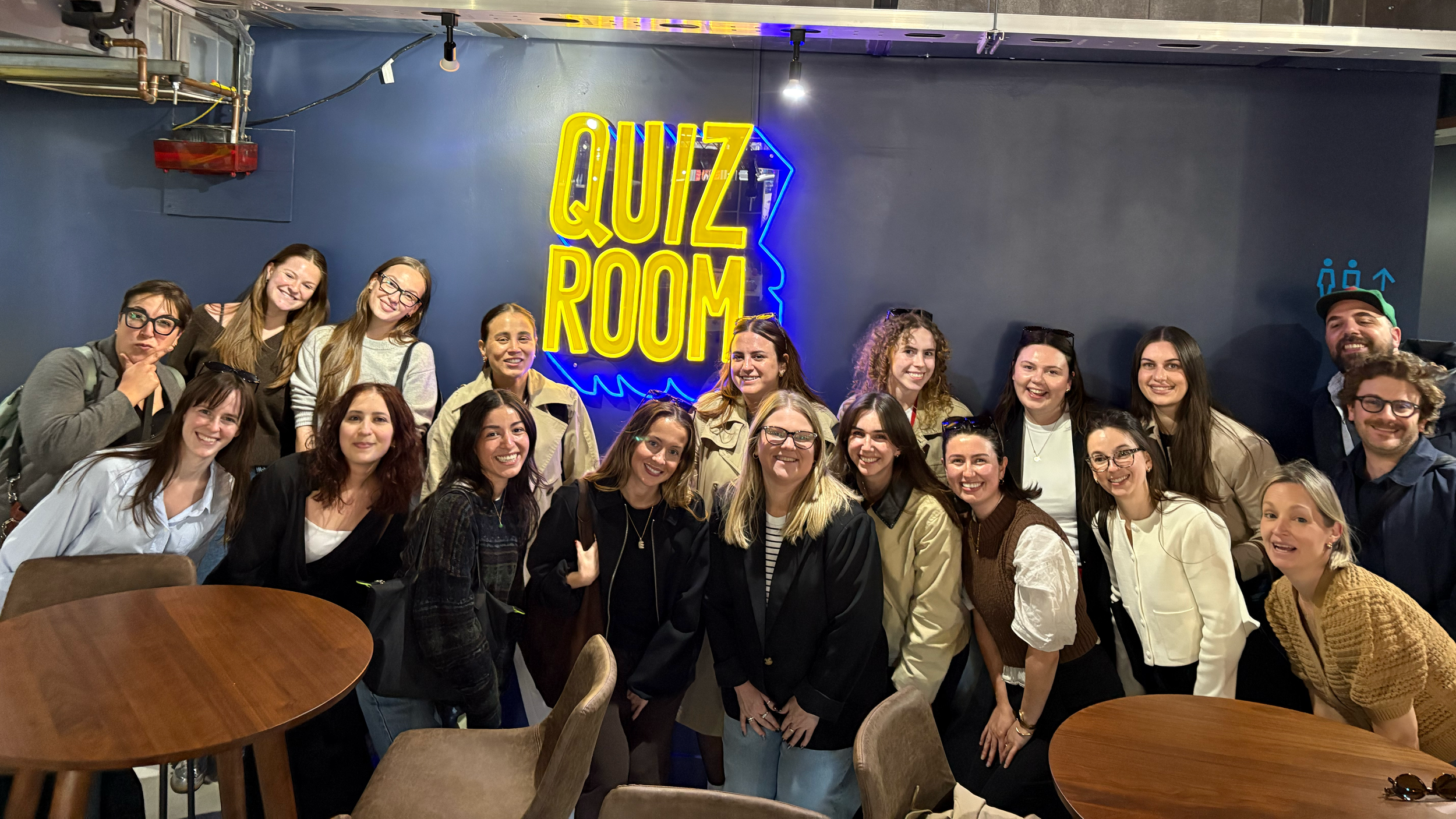
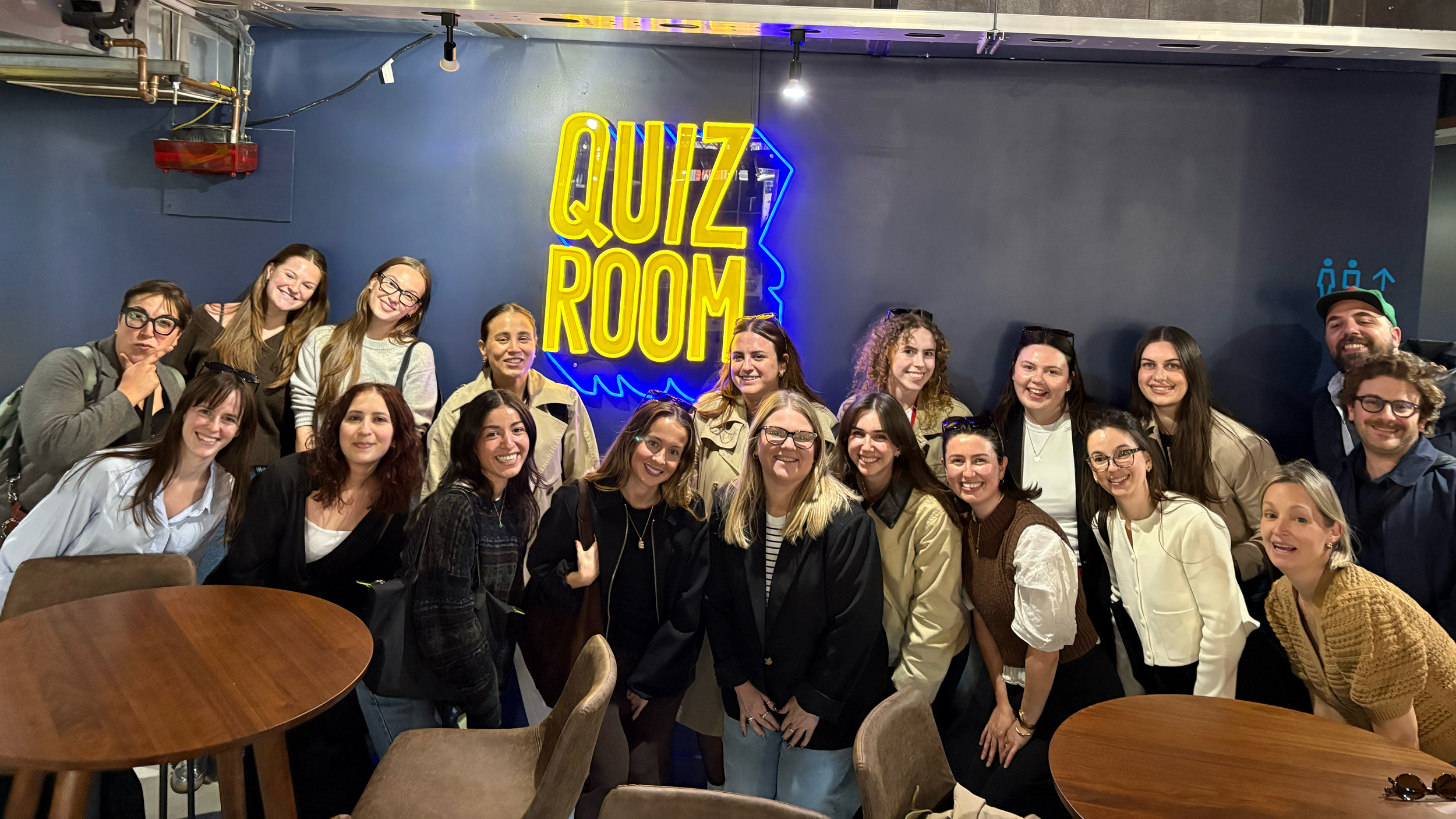
This year took us to a competitive trivia showdown, two very different galleries, a debate podium (where we confirmed a hot dog is not a sandwich) and an afternoon building our own AI skills. Each activity took us out of our routine and gave us a chance to spend time with people we don’t always work with. It was a great reminder that our people, our thinking, and our willingness to show up differently drives our best work.
Here are the takeaways I’m bringing into 2027.
Curiosity is a habit
Nothing humbles a room of eager communications people faster than a buzzer and a question nobody can answer. Quiz Room Toronto had us scrambling on topics far outside our day-to-day, and that was the point.
Brands that only know their own category often end up talking to themselves. The ideas that break through are ones inspired by industries entirely different from our own: music, sport, food, whatever the internet is obsessed with this week. Curiosity is a muscle that needs to be worked and challenged in a myriad of ways. Being experts at being experts, requires us to use our whole brain in ways we haven’t dreamt of yet.
The tool is the easy part
Every group in our AI skills development workshop got the same brief and the same technology, and every group came back with something different. Something driven by our own experiences, understanding and inputs. While AI can make average outputs faster and cheaper to produce. We don’t do average.
Our value is our judgment and our understanding is what will make those outputs stand out. The skills we build will help us go deeper, faster. But our people and their talent and lived experience will keep making us better.
Audiences decide before they read
Avedon’s portraits at The Image Centre told entire life stories before we read a single caption. From George Wallace to Dr. Benjamin Spock and his wife Jane, I was struck by how much you could learn through a look, a posture, a choice of clothing. Consumers read brands the same way.
Before anyone absorbs our key messages, they’ve already formed a view from the creator a brand chose, the photo on the product page and how a spokesperson carries themselves on camera. While we spend so much energy on words, the question we need to ask more is: what can be said with no words at all?
The real story is unpolished
Avedon built his career by refusing to flatter his subjects. At the Gardiner, the collectors as part of In Search of Imperfection chose porcelain specifically for its uneven shapes and flaws. Both support the same case that imperfection is what makes something special, memorable.
That’s never been more relevant in a sea of AI-sameness. What stands out now is the unscripted moment, the real customer, the human experience. Part of our job is ensuring that every edge isn’t sanded to smoothness - the interesting lies in the pivots.
Argue against your own idea
Our own version of The Munk Debates (tongue firmly in cheek), the Thunk Debates assigned us sides we didn’t choose, and we were judged on the strength of our argument. Whether “reply all” is an act of workplace violence or if you should be allowed to recline your seat in the air, were arguments that got far more serious than you might expect.
Under the laughs is a discipline we need more of. We are rarely the audience we’re trying to reach. So, how are we considering the opposite side of the argument? The fastest way to find the weakness in an idea is to make the best possible case against it, before the public does it for you.
Finally, better thinking is an investment
Better Thinking, Better Results only works if we make room for the thinking. Four days away from our day to day is a real investment, but the time we spend together, thinking differently pays back in dividends.
More Articles